After Hours Answering Service: Cover Every Night Call
After hours answering service options compared: live operators, AI voice agents and on-call rotas, with real costs, escalation rules and a setup plan.

The phone rings at 21:40. A tenant has no hot water, a buyer wants to see a flat on Saturday, a prospect finally has ten quiet minutes to call you back. Your office closed four hours ago, so the call lands in voicemail and, most of the time, nowhere else.
An after hours answering service is the layer that catches those calls. This guide covers what it is, how it works, what it costs, what owners actually complain about, and how to switch one on without breaking any rules.
Key takeaways
An after hours answering service answers your business line outside opening hours, using live operators, an AI voice agent, or a mix of both.
Covering nights in house is expensive: US receptionists earn a median of $38,010 a year, and round the clock cover needs roughly four of them.
The decision that matters is not human versus AI. It is your escalation rule: who gets woken up, for what, and how fast.
Callbacks are regulated. In the US, telemarketing calls are barred before 8 a.m. and after 9 p.m. local time.
In the EU, callers must be told they are talking to an AI system. That obligation has applied since 2 August 2026.

The four levels of after-hours call coverage, from voicemail to an AI voice agent with human escalation. Source: Callin.io.
What an after hours answering service actually is
An after hours answering service answers calls that arrive when your team is not working: evenings, nights, weekends, public holidays, and the gaps around lunch or during site visits.
It is not a new idea. Telephone answering bureaus have served doctors and law firms for decades. What changed is who, or what, picks up.
Three models exist today. A live operator service staffs a call centre with human agents following your script. An AI answering service uses a voice agent that speaks, understands, and acts on your systems. A hybrid routes routine calls to the agent and anything sensitive to a person.
All three aim at the same outcome: no caller reaches a dead line, and your team wakes up only for the things that genuinely cannot wait.
How an after hours answering service works, step by step
The mechanics are simpler than most vendor pages suggest.
1. Forwarding. You set conditional call forwarding on your business number so that calls outside your opening hours go to the service. Your published number never changes.
2. Greeting. The service answers with your company name and your wording, not a generic script.
3. Triage. The caller is asked a short set of questions that sort the call into one of three buckets: urgent, bookable, or message only.
4. Action. Urgent calls are transferred or escalated to the on-call person. Bookable calls go straight into your calendar. Everything else becomes a structured message.
5. Handover. You receive a summary by email, SMS, or into your CRM, with a recording or transcript attached.
An AI voice agent can do more inside step four, because it reads and writes to your systems in real time: checking a job number, confirming a slot, creating a ticket. A human operator usually has to promise a callback instead.
The four ways businesses cover the night shift
Before comparing vendors, it helps to be honest about what you are replacing.
Voicemail. Free, and quietly expensive. In one dental office managers' group, the most upvoted answer to "who do you recommend for an after hours answering service" was simply "voicemail", posted as a joke that everybody recognised.
An on-call rota. Your own staff carry the phone in shifts. This is what several contractors in a ServiceTitan dispatchers group said they do, with the CSR rota matched to the technician rota. It keeps quality high and burns people out.
A live answering service. Predictable and genuinely 24 hours. Trade forum veterans have flagged the same trade off for years: operators are consistent, but hard to train on anything specific to your business.
An AI voice agent with human escalation. Answers on the first ring, follows the same script every time, and hands over when the conversation leaves its remit.

Photo by Sara Mobasheri on Unsplash (free licence).
Features that matter after 6 p.m.
Daytime feature lists do not transfer well to the night shift. These are the ones that change outcomes:
Real 24/7 cover, including public holidays, not a reduced overnight tier.
A written escalation matrix: which words or answers trigger a transfer, and to whom.
Live calendar booking, so the caller leaves with a time, not a promise. Our guide to AI appointment scheduling covers the booking flow in detail.
SMS follow-up for callers who hang up before the agent answers. See missed call text back.
Transcripts and recordings, so the morning team starts with context.
Languages your customers actually speak, which at night often means more than one.
CRM and helpdesk writes, not just an email dump.
One feature is worth more than the rest: a clear rule for what the service must never do. Night calls go wrong when a stand-in improvises on pricing, liability, or medical advice.
What after hours coverage costs
Start with the in-house benchmark, because it frames everything else. The US Bureau of Labor Statistics puts the median pay for receptionists at $38,010 a year, or $18.27 an hour, in May 2025. Covering 168 hours a week needs about four full-time people before holiday, sickness, or night premiums.
Outsourced services price in four ways: per minute, per call, a monthly bundle of minutes, and a setup fee. Live services commonly sit in the hundreds of dollars a month for modest volumes, with overage rates that bite during a storm week.
AI voice agents are usually billed per minute or per conversation, at a fraction of live rates, with the cost concentrated in configuration rather than headcount. We break the models down in our guide to AI voice agent pricing, and current plans are listed on the Callin.io pricing page.
Three costs hide in the small print: per-minute rounding, charges for a dedicated number, and holiday surcharges on exactly the nights you need cover.

Verified figures on after-hours coverage, from the US Bureau of Labor Statistics, Gartner, the FTC and the EU AI Act. Source: Callin.io.
What a missed night call really costs
Most articles on this topic invent a number. The honest version is that the cost depends on two things you can measure: your average job value, and how many callers try a competitor instead of calling back.
What research does support is the value of speed. The Harvard Business Review study The Short Life of Online Sales Leads by Oldroyd, McElheran and Elkington found that most companies respond to inbound enquiries far too slowly to qualify them well.
After hours, that gap is not minutes. It is the twelve or fourteen hours between a 22:00 call and the moment your office opens.
At industry scale the same logic shows up in automation forecasts. Gartner predicted that conversational AI would reduce contact centre agent labour costs by $80 billion in 2026, with one in ten agent interactions automated, up from an estimated 1.6% when the forecast was published in 2022.
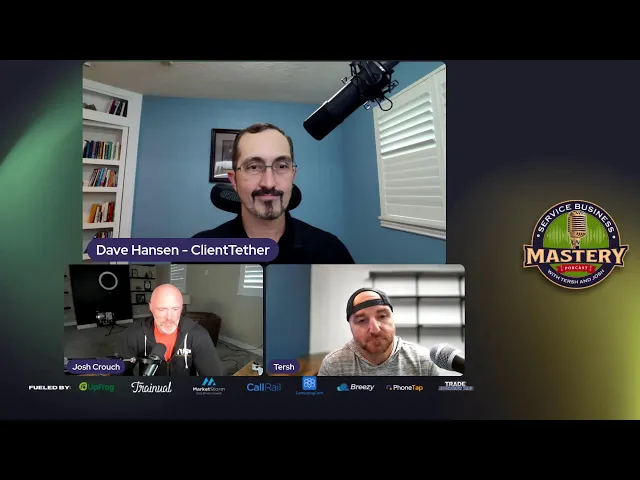
Service Business Mastery Podcast, "The 5-Minute Rule: How Speed-to-Lead Can 10x Conversions", an independent podcast for home service operators.
Industries where the night shift pays for itself
Every business misses calls. Only some lose money by the hour.
Trades and home services. A burst pipe at midnight is awarded to whoever answers. See AI receptionists for HVAC.
Legal. Intake calls are high value and rarely repeated. Our breakdown for law firms covers conflict checks and intake scripts.
Property management. Tenants call when something breaks, which is almost never during office hours. The Callin.io property management page shows the triage flow.
Healthcare and clinics. Out-of-hours lines carry real clinical risk. On a LinkedIn thread about after-hours care lines, one practitioner argued that they are too often staffed by people who do not know the patient, the current condition, or the history.
IT and managed services. Night incidents need a ticket and an owner, not a message pad. See IT support.
Live operators versus AI voice agents
Live operators still win on emotionally loaded calls: a bereavement, a complaint that has escalated, a caller who is frightened. They also win when your process is unusual and cannot be written down cleanly.
AI voice agents win on consistency, speed of pickup, language coverage, and anything that requires looking something up while the caller waits. They do not get tired at 03:00, and the script does not drift in week six.
They lose when the conversation leaves the map. That is why escalation design matters more than voice quality. A good deployment of an AI phone agent is judged by how cleanly it hands over, not by how long it keeps talking.
A practical split: the agent handles identification, triage, booking, and status questions. A person handles anything involving money owed, legal exposure, or distress.
What owners actually complain about
Search the forums rather than the vendor pages and the same five frustrations come back.
Quality drifts. In a ServiceTitan CSR and dispatcher group, an operator wrote that their long-standing answering service "was great" until quality dropped quickly, and asked the group for alternatives.
Scripts stay shallow. Threads on r/LawFirm about after-hours and overflow answering run to dozens of replies, and the recurring theme is that operators take a message competently but cannot answer anything specific.
Bills surprise people. Public reviews of established answering services include customers reporting monthly invoices far above what they expected before the provider corrected them.
Callback promises are not kept. On a National Association of Rural Health Clinics member forum, clinics describe a hard expectation that every call taken by an answering service is returned within 30 minutes. Most services are not instrumented to prove that.
On-call rotas quietly collapse. The cheapest option is the one your best people resent most.

A nine-point checklist for after-hours call handling, built from operator forum threads and compliance requirements. Source: Callin.io.
Rules you cannot ignore after hours
Answering an inbound call at night is unregulated almost everywhere. What you do next is not.
Callback timing. Under the US Telemarketing Sales Rule, calls to consumers are barred before 8 a.m. and after 9 p.m. in the called party's local time. If your service captures a lead at 23:15, the outbound follow-up waits until morning. Our guide to AI outbound calling covers consent in more depth.
AI disclosure in the EU. Article 50 of the EU AI Act requires that people are told when they are interacting with an AI system, in a way that is clear at the first interaction and not buried in terms. Those transparency obligations have applied since 2 August 2026.
Recording consent. Rules differ by state and by country. Announce recording in the greeting and you avoid the argument entirely.
Emergency wording. Any line that might receive a medical or safety emergency needs an explicit instruction to hang up and call emergency services.
A 14-day plan to switch on after hours cover
Days 1 to 2. Pull call logs for the last 90 days. Count calls outside opening hours by hour and by weekday. Most owners find the volume clusters in two narrow bands, not across the whole night.
Days 3 to 4. Write the three buckets: urgent, bookable, message. List the exact phrases that make a call urgent.
Days 5 to 7. Build the script and the escalation matrix, including who is on call each night and what happens if they do not answer within two rings.
Days 8 to 10. Configure the service, connect the calendar and CRM, and test with ten scripted calls, including two deliberately awkward ones. A conversational IVR approach beats a numbered menu here.
Days 11 to 12. Switch on conditional forwarding for one weekday evening only. Read every transcript the next morning.
Days 13 to 14. Extend to weekends. Fix the three things the transcripts show you got wrong, then review monthly.
Track four numbers: answer rate outside hours, escalation accuracy, bookings created at night, and how often the on-call person was woken for something that could have waited.
Frequently asked questions
What is an after hours answering service?
It is a service that answers your business phone line when your office is closed, takes a structured message, books appointments, and escalates urgent calls to an on-call person.
How much does an after hours answering service cost?
Live services are usually priced per minute or per call, with monthly bundles for modest volumes and overage rates beyond them. AI voice agents are typically billed per minute or per conversation at a much lower unit cost. Compare both against roughly four full-time receptionists, which is what 24/7 in-house cover actually requires.
Do answering services still exist?
Yes. The traditional call-centre model is still widely used in healthcare, legal, and property. What has shifted is that a growing share of calls is handled by voice agents with humans kept for escalation.
Will my callers know it is not my own staff?
With a live operator, usually not, provided the greeting and script match your brand. With an AI voice agent in the EU you must say so, because Article 50 of the AI Act requires it.
Can an after hours service book appointments rather than just take messages?
Yes, if it is connected to your live calendar. Message-only cover is the main reason businesses feel an answering service is not paying for itself.
How fast can it be set up?
Conditional forwarding takes minutes. The work is in the script and the escalation rules, which is why a two-week pilot beats a same-day launch.
The night shift, answered
After hours calls are not overflow. They are often the most motivated callers you get all week, because something has gone wrong or someone finally has time to deal with you.
You do not need a bigger team to answer them. You need a clear triage, a real escalation rule, and something that picks up on the first ring at 23:40.
If you want to see how that sounds on your own number, set up an agent at callin.io and run it for one evening. Read the transcripts in the morning, and you will know within a week whether your nights are worth covering.


