AI Answering Service: What It Costs, How It Works and How to Choose One in 2026
What an AI answering service is, how it handles calls, what it costs compared with human answering services, and 7 questions to choose the right one for your business.
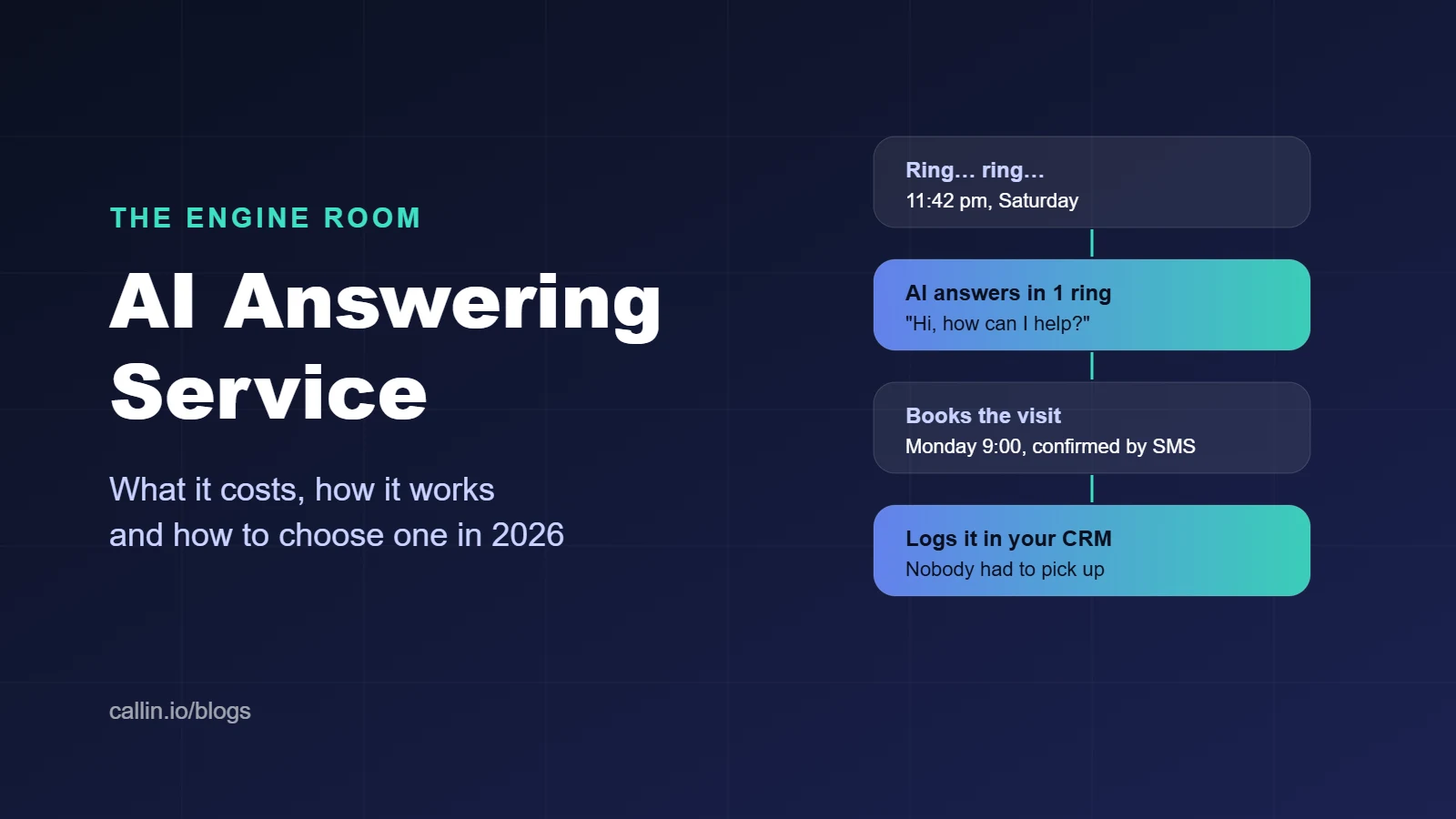
An AI answering service picks up every call to your business, day or night, talks with the caller in natural language and gets something done: it answers questions, books appointments, takes detailed messages and transfers urgent calls to the right person. Unlike a voicemail box or a phone menu, the caller never has to press a button or wait for a callback.
The need is real. When 411 Locals monitored calls to 85 small businesses across 58 industries for a month, only 37.8% of calls were answered by a person. The rest went to voicemail (37.8%) or got no response at all (24.3%). This guide explains what that costs, how an AI answering service works, what you should pay and how to choose one without regrets.
Key takeaways
Most small businesses miss more than half of their calls, and many callers never try again.
AI answering services typically cost $25 to $300 a month, against $175 to $700 for human answering services at small-business volumes.
The value is not in answering, but in what happens next: bookings, CRM records and clean handoffs.
The best setups are hybrid: AI handles routine calls, people handle the sensitive ones.
What is an AI answering service?
An AI answering service is a virtual receptionist powered by voice AI. It connects to your phone number, understands what callers say in their own words, and responds with a natural voice. Behind the scenes it uses speech recognition, a language model trained on your business information and integrations with your calendar, CRM or ticketing tool.
It sits between two older options. A traditional answering service uses human operators who follow a script and take messages, usually billed per minute or per call. An IVR, the classic "press 1 for sales" menu, routes calls but cannot hold a conversation. An AI answering service combines the availability of a machine with the flexibility of a conversation, and it can act directly on your systems.
The hidden cost of a missed call
A missed call rarely waits for you. According to the 2026 Small Business Missed Call Revenue Study, which aggregates industry research, 78% of customers abandon a business after an unanswered call and 85% will not call again after reaching voicemail. The caller simply dials the next result on Google.
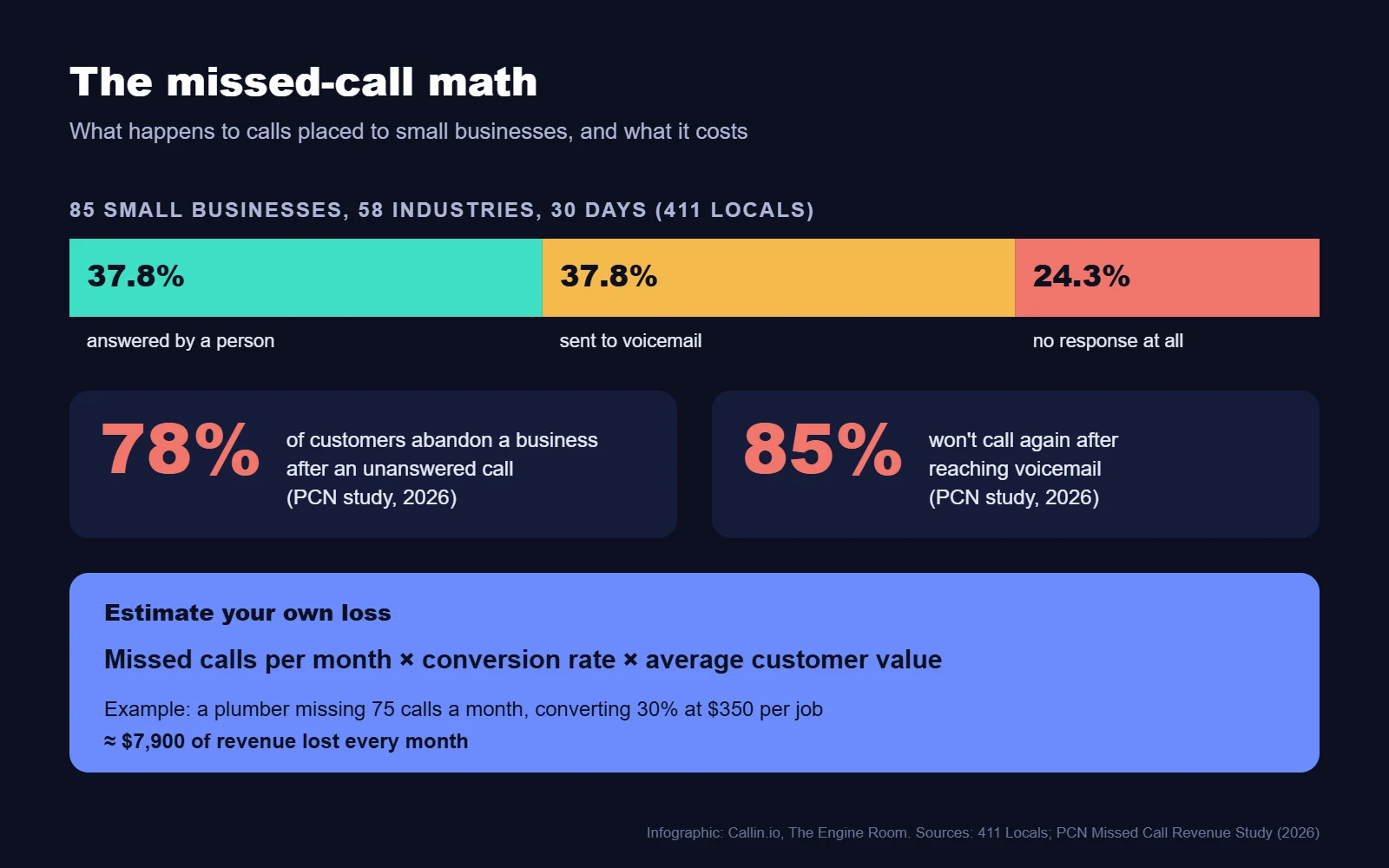
Infographic: Callin.io, The Engine Room. Sources: 411 Locals, PCN Missed Call Revenue Study (2026)
You can estimate your own exposure with a simple formula: missed calls per month, times the share that would have become customers, times the average value of a customer. A plumbing company that misses 75 calls a month, converts 30% of callers and earns $350 per job leaves around $7,900 on the table every month. Even if the real numbers are half that, an answering solution pays for itself many times over.
How an AI answering service handles a call
A well-designed AI answering service follows a clear flow. It greets the caller with your business name, states that it is an AI assistant, understands the reason for the call and chooses the right path. Every call ends with a written record, so nothing depends on someone remembering to call back.
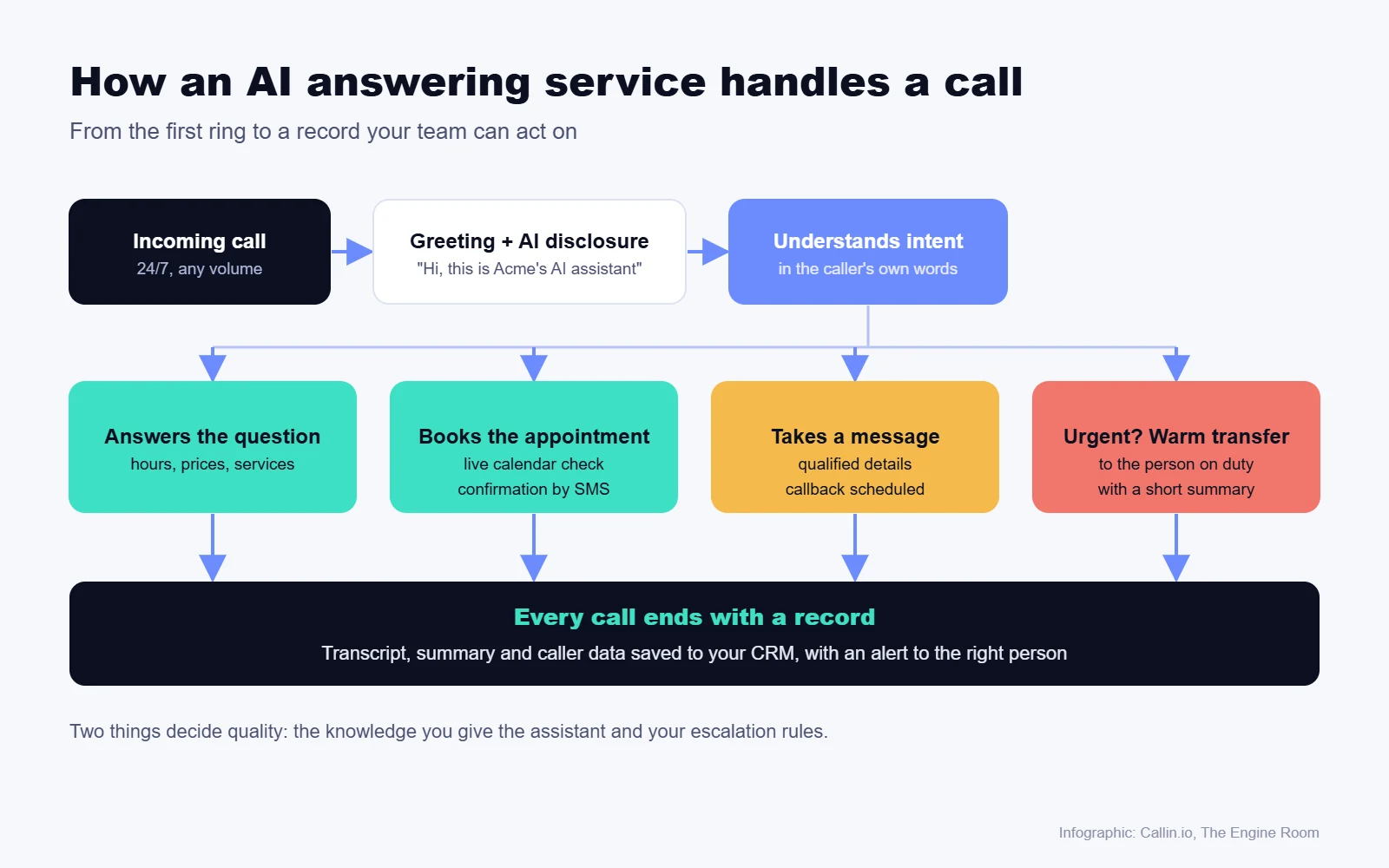
Infographic: Callin.io, The Engine Room
The quality of that flow depends on two things you control. The first is the knowledge you give the assistant: opening hours, services, prices, areas you cover and policies. The second is the escalation rules: which calls must reach a person immediately, which can wait for a callback and who receives them. Most disappointing deployments fail on these two points, not on the technology.
AI answering service vs human answering service: what it costs
Pricing models differ, so compare monthly costs at your real call volume. OnceHub's 2026 pricing comparison gives a useful overview of the market.
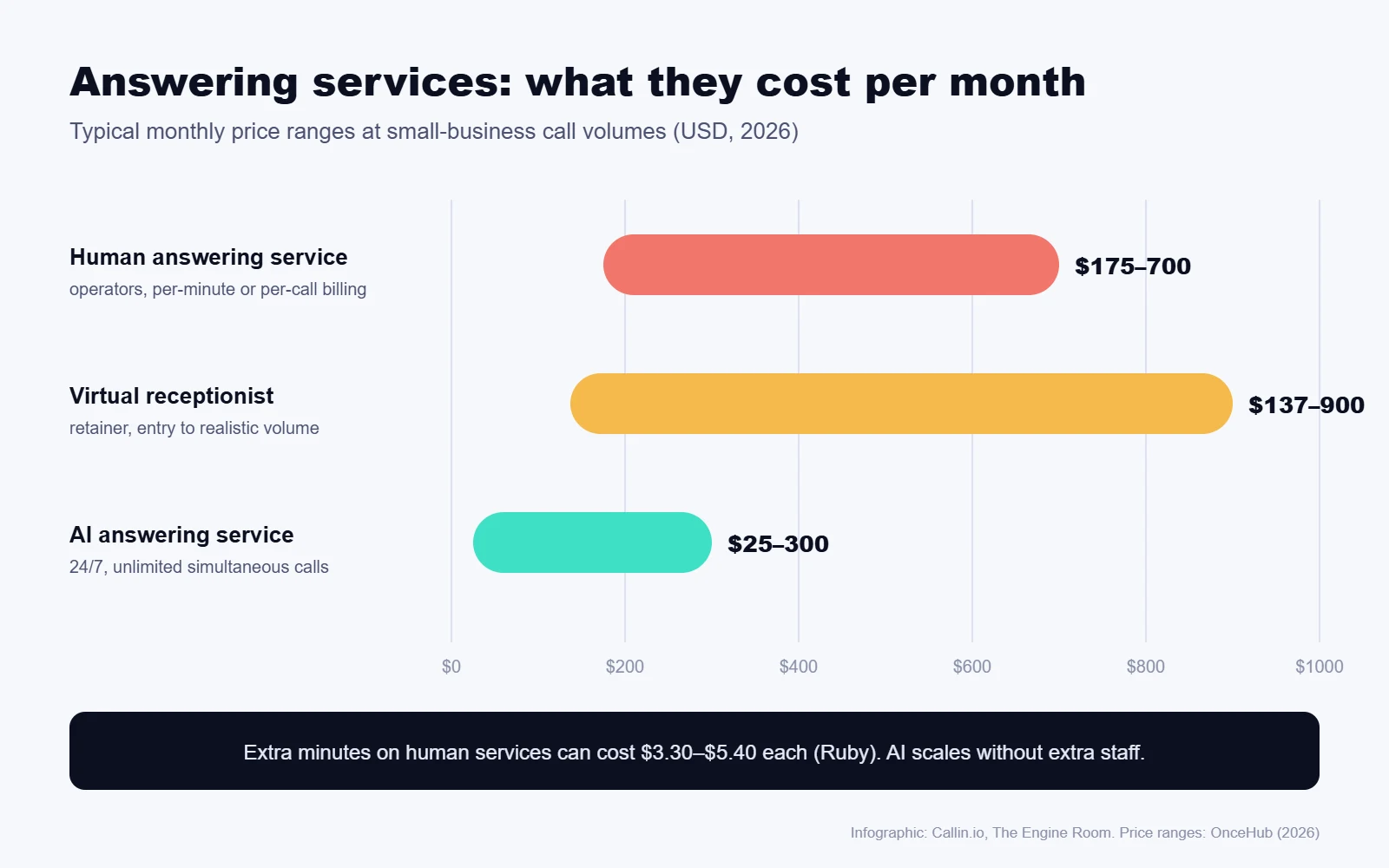
Infographic: Callin.io, The Engine Room. Price ranges from OnceHub (2026)
Human services such as Ruby start around $250 a month, and extra minutes can cost $3.30 to $5.40 each. AI answering services usually cost between $50 and $200 a month for full-featured plans, or a few cents per minute on usage-based platforms. The AI option also scales without extra staff: ten simultaneous calls cost the same per minute as one.
Price is only half the equation. A cheaper service that cannot book appointments or update your CRM simply moves the work back to your team. The Aloware ranking of AI call answering services makes the same point: the real difference is whether an answered call becomes an actionable record or an orphaned transcript.
Which businesses benefit most
Any business that lives on the phone can benefit, but the return is highest where calls are frequent, questions repeat and each new customer is worth a lot.
Real estate and property management: viewing requests, tenant questions and maintenance reports at any hour. See how an AI receptionist for property management handles them.
Home services and trades: plumbers, electricians and HVAC teams who cannot pick up while on a job.
Clinics and wellness studios: bookings, cancellations and reminders, with urgent calls routed to staff.
Law firms and consultancies: first qualification of new enquiries, so partners only call back qualified leads.
E-commerce and customer support: order status, returns and delivery questions, like the setup that saved Italian Gourmet UK £66,000 a year.
IT help desks: password resets and first-level tickets, as in our AI voice agents for IT support.

Photo: Lynn Van den Broeck on Unsplash
How to choose an AI answering service: 7 questions
Demos always sound impressive. These questions reveal how a service will behave on your real calls.
Can it act, or only take messages? Check native integrations with your calendar, CRM and helpdesk.
How does it transfer calls? A warm transfer passes a short summary to your colleague, so the caller never repeats themselves.
How natural is it under pressure? Call it yourself, interrupt it, change your mind and speak with background noise. Latency matters: our guide on reducing latency in voice agents explains why.
What does it do when it does not know? It should say so and take a message, never invent an answer. Read more on LLM hallucinations.
Which languages does it speak? Essential if your customers call from different countries.
Is it compliant? Ask about GDPR, data storage, call recording consent and the EU AI Act duty to disclose that the caller is talking to an AI.
What is the real monthly cost? Include minutes, numbers, integrations and any minimum commitment. Our AI voice agent pricing guide breaks down every layer.
Setting it up: a 5-step playbook
List your top ten call reasons. Check your call log or ask the person who answers the phone today.
Write the knowledge base. Short, factual answers for each reason, including what the assistant must never promise.
Define escalation rules. Emergencies, angry customers and high-value leads go straight to a person, with a clear fallback if nobody answers.
Test with real scenarios. Make twenty test calls with different accents, interruptions and unusual requests. Our guide to prompting AI voice agents helps you refine the instructions.
Review every week. Read transcripts, fix the three most common problems and add new answers. After a month, most teams reach a stable, reliable setup.
Frequently asked questions
Will callers know they are talking to an AI?
They should. In the EU the AI Act requires it since August 2026, and a short, friendly disclosure at the start of the call builds trust. A natural voice and fast responses matter more to callers than pretending to be human.
Can an AI answering service book appointments directly?
Yes, if it integrates with your calendar or booking system. It checks availability in real time, confirms the slot with the caller and can send a confirmation by SMS or email.
What happens with urgent calls?
You define the rules. The assistant recognises urgent situations, such as a water leak or a medical concern, and transfers the call immediately or alerts the person on duty.
Is an AI answering service better than a human one?
For routine calls it is faster, always available and cheaper. For complex or emotional conversations a person is still better. That is why the most effective setups combine both.
How long does it take to set up?
A basic service can run in a day. A setup with integrations, custom escalation rules and proper testing usually takes one to three weeks.
The bottom line
An AI answering service is one of the fastest ways for a small or mid-sized business to stop losing customers on the phone. Choose one that acts on your systems, hands over cleanly to your team and tells callers the truth when it does not know. Then keep improving it every week.
Want your calls answered around the clock by an agent that books, qualifies and transfers? Try Callin.io for free and hear it on your own number.