AI Voice Agent for Ecommerce: Answer Order Calls 24/7
AI voice agent for ecommerce: answer order status, return and after-hours calls automatically, hand the hard cases to your team, and end hold times.

What an AI voice agent does on an ecommerce phone line
An AI voice agent for ecommerce answers the phone, finds the order, reads back the real status from your systems, takes a return request, and texts the tracking link while the caller is still on the line.
What it does not do is decide a damaged item claim or approve a refund outside policy. Those stay with your team, with the order number, the reason and the transcript already captured.
The reason this works on a store line and not on, say, a hospital line is call mix. Most retail calls have a single correct answer sitting in a database the caller cannot see. That is the easiest work in support to automate, and the most boring work to staff.
Key takeaways
Order status, policy questions and in policy returns are the three calls worth automating first.
Start on overflow and after hours, not on your main menu. Overflow cannot take a call away from a person who would have answered it.
Track cost per resolved call, not minutes. Gartner expects generative AI cost per resolution to pass three dollars by 2030.
Disclose the agent at the start of the call. In the EU that is a legal duty, not a courtesy.
The cheapest order status call is the proactive message that prevents it.
Why order status calls pile up on the phone
Because the answer changes by the hour and lives somewhere the shopper cannot reach. A customer checks the confirmation email, then the carrier page, sees nothing move for two days, and calls.
The timing is the second problem. People chase parcels in the evening, at lunch and on Sunday afternoon, exactly when your desk is thinnest. Those calls land in voicemail, and a voicemail about a late parcel comes back as a chargeback or a one star review.
The volume is also structural, not seasonal. In the United States, e-commerce reached 17.9 percent of total retail sales in the third quarter of 2026, according to the US Census Bureau. More parcels in transit means more people asking where they are.
So a store line carries two pressures: repetitive questions by day that keep your best people from the calls needing judgment, and a steady stream arriving when nobody is scheduled.
The economics of a phone line, in verified numbers
It helps to put real figures next to the decision instead of vendor promises.
Staffing. The US Bureau of Labor Statistics puts the median hourly wage for customer service representatives at 21.53 dollars in May 2025. A four minute order status call is roughly 1.44 dollars in wages before overhead, and only if someone is free when the phone rings.
Pressure. Gartner found that 91 percent of service and support leaders reported pressure from executive leadership to implement AI, in a survey of 321 leaders conducted in October 2025.
Reality. In a later Gartner survey of 275 leaders, run in July and August 2026, only 21 percent said their organisation had reduced human agent headcount because of AI, while 71 percent were moving agents into different roles. Reassignment, not replacement.
Cost direction. Gartner also predicts that by 2030 cost per resolution for generative AI will exceed three dollars. Cheap minutes today are not a permanent moat, so build on resolution, not talk time.
Productivity. The NBER working paper Generative AI at Work studied 5,179 customer support agents and measured a 14 percent average increase in issues resolved per hour, rising to 34 percent for novice and low skilled workers.

Verified figures behind an ecommerce phone line. Sources: US Census Bureau (Q3 2026), US Bureau of Labor Statistics (May 2025), Gartner (2026 surveys and predictions), NBER Working Paper 31161.
Six calls an agent can close, and three it must not
An inbound agent is three things: instructions, a knowledge base, and a short list of actions it may take mid call. What it closes depends entirely on which of your systems it can read.
1. Order status. The agent asks for the order number or the phone number on the order, calls your order system, and reads back carrier status and expected date. If your platform exposes an API, this is the single highest volume win on the line.
2. Policy and product questions. Shipping cutoffs, delivery zones, sizing, restock dates, warranty length. These come from documents you control, and a stale policy page read confidently is worse than a hold queue, so keep the knowledge base dated.
3. Returns and exchanges inside policy. Confirm the order, read the window, capture the item and the reason, then either open the return through your system or create a ticket with every field filled in.
4. Address changes before dispatch. A narrow window, but worth automating, because the alternative is a parcel going to the wrong street.
5. Reorders. For repeat consumables, a phone reorder is a short, scripted conversation.
6. Calls in another language. If your daytime team takes Spanish, German or Italian calls, your night agent should too. This is where one agent replaces three partial rotas.
The three it must not close: refunds outside policy, damaged or missing item claims, and anything a caller frames as a complaint about a person. Those need a human decision, and the agent earns its keep by arriving at that human with the facts already gathered.

Four levels of call autonomy on a store line, from read only answers to full write access. Source: Callin.io deployment practice.
Where to place the agent: overflow, after hours, or the whole line
These are three different risk levels, and most stores get this decision backwards.
Overflow first. The agent takes only the calls that were already going to voicemail: everyone busy, nobody picking up, caller about to hang up. Nothing about your daytime flow changes, and within a week you have transcripts telling you what your missed callers actually wanted.
Then after hours. Give the agent a schedule in your own timezone, with holidays set explicitly. Evenings and weekends are where parcel anxiety lives.
The full line last. Replacing your menu with a conversational front door is the biggest change to the caller experience and the widest blast radius if routing is wrong. If you go there, read our piece on conversational IVR first, and keep the old menu one switch away.

Order volume is where support volume comes from. Photo by Remy Gieling on Unsplash.
Peak season without peak headcount
Black Friday breaks phone lines in a specific way: volume triples while the call mix gets simpler. Most of the surge is status, delivery dates and shipping cutoffs, the part a voice agent handles best.
Two things to size in advance. Concurrency: ask your platform how many simultaneous calls your plan allows, then compare that to the spike a marketing email produces. And the knowledge base: the seasonal return window and the shipping cutoffs have to be in there before the season, not during it.
Decide now what happens at the limit, too. A short hold with an honest message and a promised callback beats an agent that answers and then cannot hear anybody.
The cheapest call is the one that never happens
Voice is the wrong channel for proactive updates. Nobody wants a robot phoning to say a parcel left the warehouse.
Send the dispatch note, the out for delivery note and above all the delay note by message, and answer the replies in the same thread. A missed call text back flow covers the gap when a call does come in and nobody can take it.
Keep outbound voice for the calls where a conversation is genuinely the point: a failed delivery that needs a new slot, a high value order to confirm, a short satisfaction check after a return. Our guide to AI outbound calling covers the consent side of that.
The same logic applies off the phone. If your inbox carries the same repetitive questions, an AI email agent is the cheaper half of the same project.
What it costs and the only number that matters
Voice agents are priced per minute, which makes comparison easy and decisions bad. A cheap agent that resolves a third of calls and transfers the rest costs more than an expensive one that closes most of them, because every transfer still costs you a person.
So measure cost per resolved call: platform spend plus carrier minutes, divided by calls that ended without a human. Then compare that to the wage figure above. We break the models down in AI voice agent pricing, and the tiers are on our pricing page.
Two costs stores forget: integration work, because an agent without order lookup is a nicer answering machine, and prompt maintenance, which our notes on prompting AI voice agents explain.
Disclosure, consent and data: what the rules require
If you sell into the European Union, the AI Act settles the disclosure question for you. Article 50 requires that AI systems meant to interact directly with people are built so those people are informed they are interacting with an AI system, unless it is obvious. Those transparency obligations have applied since 2 August 2026.
In practice that is one sentence at the top of the call, in the caller's language, before anything is captured. Done well it also reduces hang ups, because the caller stops trying to work out what they are talking to.
Then the data questions. Where are recordings and transcripts stored, how long are they kept, who inside your company can read them, and is order data flowing anywhere it should not. Our AI voice platform page covers how we handle that, and Gartner expects regulation to add work rather than remove it: it predicts AI related regulatory change will increase assisted service volume 30 percent by 2028.
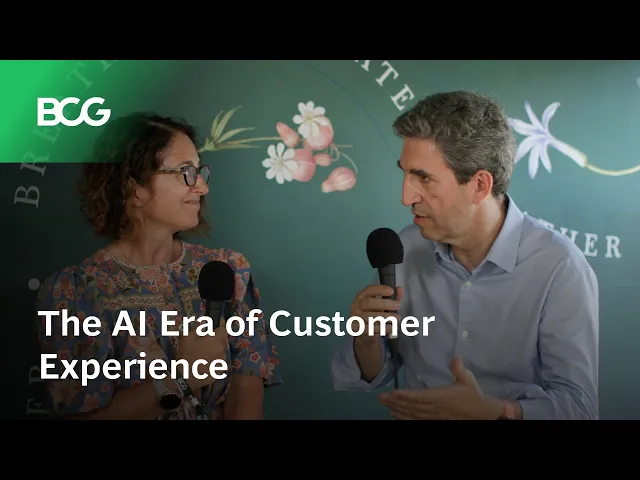
Boston Consulting Group and Microsoft on AI driven customer conversations and the trust they have to earn. Source: BCG, The AI Era of Customer Experience.
What store owners actually say in the forums
The discussion threads are more useful than the case studies, because they are about what goes wrong.
The recurring complaint from shoppers is not the robot voice. It is the dead end: an agent that cannot reach a person, or that loops back to the same question. A much repeated point in an r/shopify thread on phone support is that callers who hit a wall just dial the next shop on the list.
Store owners who report good results describe the same narrow setup: the agent can look up orders, it says what it is, and it transfers fast. Those who report bad results almost always gave it the main line on day one.
The sharpest question in those threads, asked repeatedly on Quora and in r/voiceagents, is whether it saved money or just annoyed customers. The honest answer is that it depends on your call mix, and that outbound automated calling is regulated very differently from answering an inbound call.
A one week rollout plan
Day one. Export your last two hundred inbound calls and tag them by reason. If status, policy and returns are the majority, this project pays for itself.
Day two. Write the knowledge base: shipping policy, return policy, the twenty questions your team answers most, each with a date on it.
Day three. Connect order lookup and test ten real orders, including one cancelled, one partly shipped and one with a wrong address.
Day four. Write the handoff rules: which calls transfer live, which create a ticket, which get a callback.
Day five. Switch it on for overflow only, and read every transcript that evening.
Day six and seven. Fix what the transcripts show, then extend to after hours. Keep a weekly transcript review, because catalogues change and the agent does not notice.

Seven checks before an ecommerce voice agent takes live calls. Source: Callin.io rollout checklist.
Frequently asked questions
Can AI really handle ecommerce customer service calls?
It handles the calls with one correct answer in your systems: order status, policy, in policy returns, address changes before dispatch. Judgment calls still need people.
What percentage of calls can an AI voice agent close on its own?
There is no honest universal number. Stores with order lookup connected and a current knowledge base close the majority of status and policy calls. Stores without integration close far fewer.
Can an AI voice agent make outbound calls too?
Technically the same agent can. Legally it is a different activity, with consent and time of day rules that vary by country, so treat outbound as a separate project.
Do I have to tell callers they are speaking to an AI?
In the European Union, yes. Article 50 of the AI Act requires people to be informed they are interacting with an AI system where that is not obvious, and those obligations have applied since 2 August 2026. Elsewhere rules vary, and disclosure still reduces hang ups.
Will an AI voice agent let me cut my support team?
The evidence points to reassignment rather than cuts. In Gartner's July and August 2026 survey, 21 percent of leaders had reduced headcount because of AI while 71 percent were moving agents into other service roles.
What breaks most often in a store deployment?
Three things, in order: no order lookup, so the agent cannot answer the main question; a stale knowledge base, so it answers confidently and wrongly; and no fast route to a person.
Where to start
Call your own store line tonight at twenty to eight, from a number nobody has saved. Whatever happens to you happened to your last three evening callers.
If it went to voicemail, start with overflow. Connect order lookup, write the disclosure sentence, and read the transcripts for a week before you give the agent anything more. That sequence is the difference between a line that quietly closes calls and a line your customers warn each other about.
You can hear a Callin.io phone agent take that call on your own policies and your own order data. Start at callin.io.


