AI Receptionist for Dental Office: Stop Losing Patients
AI receptionist for dental office: answer every call, book patients 24/7 and cut no-shows without adding front desk staff. Costs, HIPAA and setup.

Your schedule has gaps. Your phone has missed calls. Most of the time those two facts are the same fact.
A dental front desk is asked to check in a patient, verify benefits, collect a copay, calm a nervous child and answer a ringing line inside the same ninety seconds. Something drops, and it is almost always the call.
An AI receptionist for a dental office is one way to stop that leak. Not a replacement for your coordinator, not a revenue machine, just a layer that picks up when nobody can.
This guide covers what the technology actually does, where dentists say it fails, what it costs, how HIPAA applies, and how to run a pilot in two weeks.
Key takeaways
Unanswered calls are a scheduling problem before they are a marketing problem.
An AI receptionist handles the repetitive 70 percent of calls: hours, directions, costs, booking, rescheduling, recall.
The real test is not the voice. It is whether the system can write into your practice management software.
You need a signed business associate agreement before any protected health information reaches a vendor.
Escalation to a human is a feature, not an admission of failure.
Start with after hours and overflow only. Expand once the transcripts look clean.

Five levels of phone coverage at a dental front desk. Source: Callin.io analysis.
Where a dental front desk quietly loses patients
The reference point for this article is a piece by Adrian Lefler in DentistryIQ, which frames the front desk as a growth bottleneck rather than a cost centre. That framing holds up.
Five failure points come up again and again.
Calls outside opening hours. A toothache at 9pm does not wait for Monday. The patient calls the next practice on the list.
Slow response to new enquiries. A form submission that sits for four hours is usually a patient who already booked elsewhere.
Reminders that only go one way. A text the patient cannot reply to is a notification, not a confirmation.
Recall lists nobody works. Overdue hygiene patients sit in the software for months because calling them is the task that always gets postponed.
Staff burnout. Constant interruption is the part of the job people quit over.
The capacity data backs this up. In the ADA Health Policy Institute poll for Q1 2026 (796 responses), 37 percent of dentists said they were not busy enough and could have treated more patients, while the average wait for a new patient appointment was 12.4 days. Demand is reaching the practice. It is not always reaching the schedule.
What an AI receptionist for a dental office actually is
Strip away the marketing and it is three components stitched together.
Speech recognition turns the caller into text. A language model decides what the caller wants and what to say back. An integration layer reads and writes to your calendar or practice management system.
The voice part is now the easy part. We covered the underlying mechanics in our guide to the AI receptionist and, for clinical settings specifically, in AI receptionist for medical offices.
What separates a useful deployment from an expensive answering machine is the third component. A system that cannot write an appointment into Dentrix, Eaglesoft, Open Dental or Curve is just taking messages with better grammar.
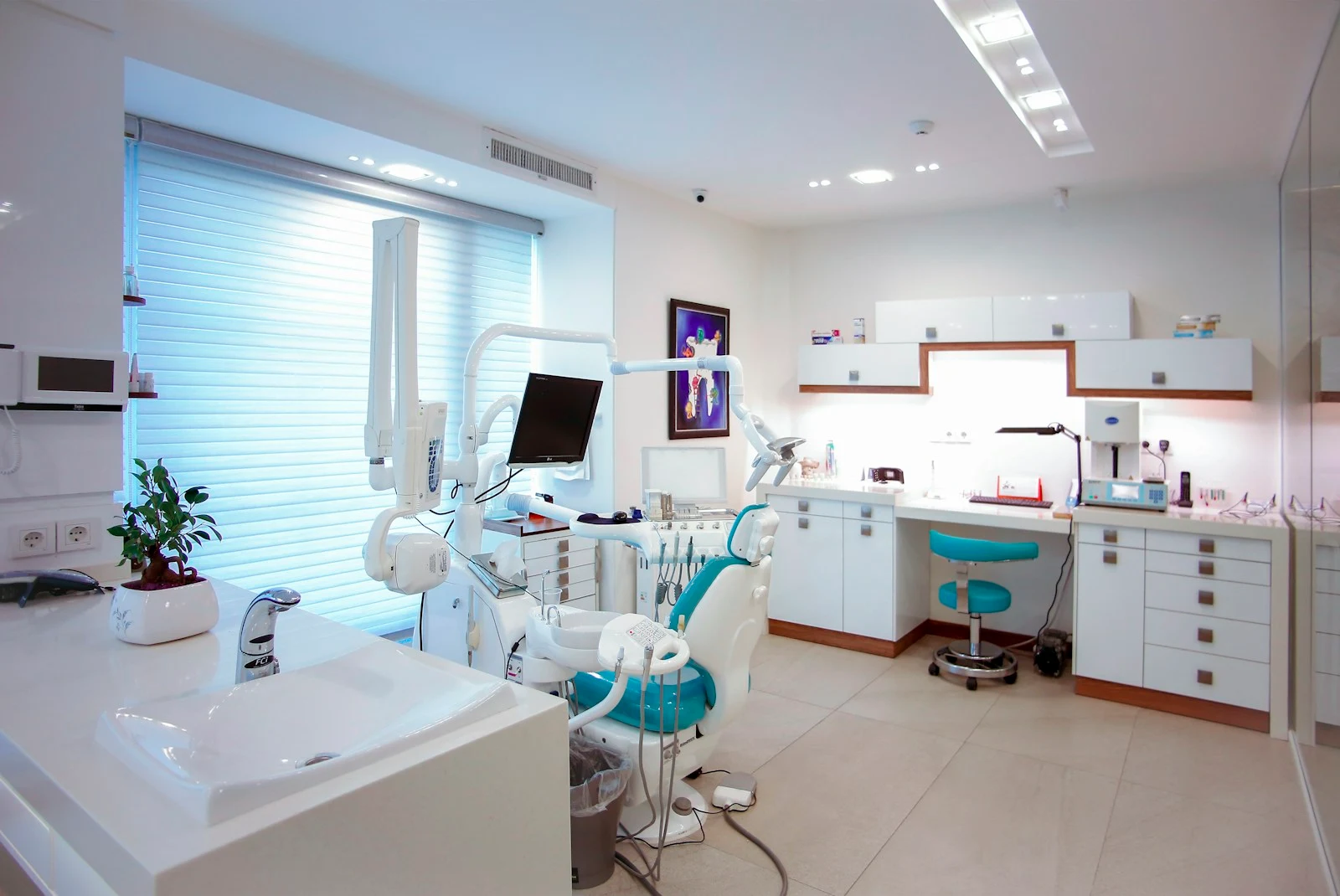
Photo: Benyamin Bohlouli on Unsplash.
What dentists actually say about it
The forums are more useful than the vendor pages. In a long r/Dentists thread on whether anyone had really used an AI phone receptionist, the top reply was blunt: not everything has to be AI just because AI exists, and the technology is not mature enough to handle everything.
A separate r/Dentists discussion on inbound calls landed somewhere more practical. AI makes sense for the simpler repetitive work: missed calls, after hours messages, appointment requests, rescheduling.
One comment in a dental AI community put the integration point perfectly: an AI that answers calls but cannot write directly into your practice management system is a glorified answering service.
And from the vendor side of the same forums, a recurring objection from practice owners: the person answering the phone does more than answer the phone.
All four of those are correct, and together they describe the right scope. Narrow, measurable, with a human on the other side of every escalation.
Four jobs worth handing to the agent
Lead response time: from hours to seconds
A new patient calling three practices does not rank them by clinical quality. They cannot assess it. They rank them by who picked up.
An AI receptionist answers on the first ring, every time, including when four lines go at once. That is the single most defensible claim in the category, because it is a property of software rather than a promise about quality.
The same logic works in reverse: our piece on AI outbound calling covers calling a web lead back within sixty seconds without anyone watching the inbox.
Two-way reminders and the no-show problem
No-shows are not a minor irritation. A study in Cureus analysing 14,066 electronic dental records found that about 31 percent of appointments were missed in that dental school clinic setting.
University clinics run higher than private practice, so treat that as an upper bound rather than your number.
A one-way SMS reminder tells the patient. A conversational reminder lets them answer. When a patient can say "Tuesday does not work, what else have you got" and get three slots back, a cancellation becomes a reschedule instead of an empty chair.
We go deeper on the scheduling mechanics in AI appointment scheduling.
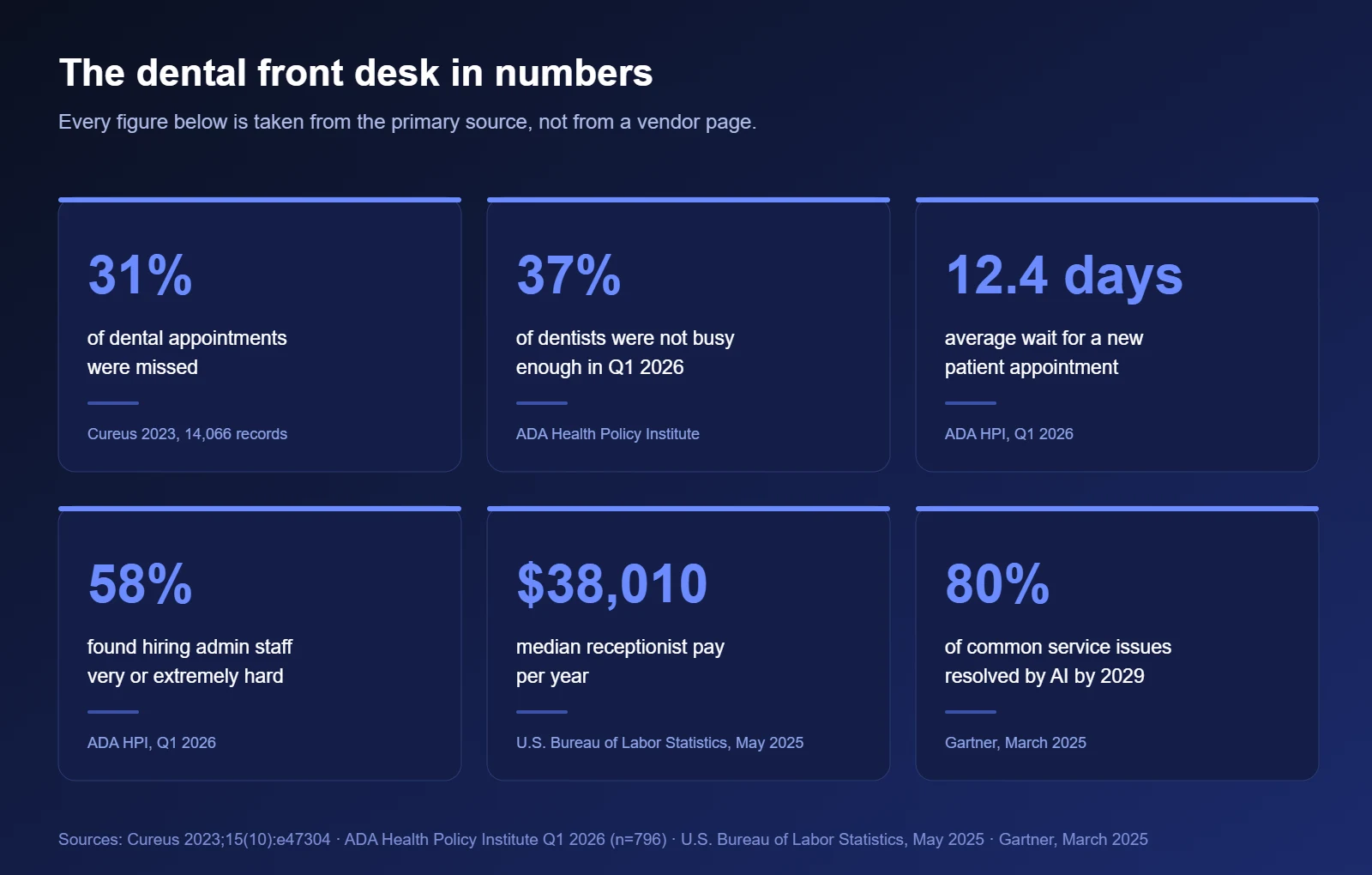
Verified figures on dental front desk capacity and staffing. Sources: ADA Health Policy Institute, Cureus, U.S. Bureau of Labor Statistics, Gartner.
Reactivating overdue patients without a phone marathon
Every practice has a recall list it does not work. Not from laziness, but because calling 300 overdue hygiene patients is forty hours of work that nobody has.
Outbound AI calling handles the first pass. The agent calls, confirms the patient still wants to come in, offers two or three slots and books the ones who say yes. The ones who hesitate get routed to a human.
Two cautions. Check your state rules on calling patients and your consent records before any outbound campaign. And cap daily volume, because a recall blitz that fills three weeks solid is a capacity problem dressed as a win.
Nights, weekends and dental emergencies
Emergency triage is where an AI receptionist earns trust or loses it permanently.
The agent should not assess clinical urgency. It should collect the facts, swelling, trauma, bleeding, pain since when, and route by rule: anything matching your emergency criteria gets the on-call number or a direct transfer, immediately, with no attempt to book.
Write those rules with a clinician, not with a vendor, then call your own line, describe a facial swelling and confirm a human picks up within seconds.
Giving the team back its day
The staffing picture explains why practices look at this at all. In the ADA HPI Q1 2026 poll, 28 percent of dentists had recruited administrative staff in the previous three months, and 58 percent of those found it very or extremely challenging.
Pay is rising to match. The U.S. Bureau of Labor Statistics puts the median wage for receptionists at 18.27 dollars an hour, or 38,010 dollars a year, as of May 2025, and projects employment in the role to decline 2 percent from 2025 to 2035 as automation absorbs routine volume.
The useful framing is not headcount reduction. It is that the coordinator you already employ stops being interrupted every four minutes and starts doing treatment plan follow-up, which is the work that actually pays.
Gartner expects the trend to go much further: its March 2025 forecast is that agentic AI will autonomously resolve 80 percent of common customer service issues by 2029, with a 30 percent cut in operational costs.
HIPAA, consent and what to ask a vendor
If the agent handles anything that identifies a patient, the vendor is a business associate.
The U.S. Department of Health and Human Services is explicit: a covered entity may disclose protected health information to a business associate only once it has satisfactory assurances, in a written agreement, that the information will be safeguarded.
So the first question is not about accuracy. It is whether the vendor will sign a business associate agreement at your plan tier, and some will not.
Then ask where recordings and transcripts live, how long they are kept, whether call audio trains models, who on the vendor side can read a transcript, and how you export everything if you leave.
Recording consent is a separate matter and varies by state. Put the disclosure in the greeting and keep it there.
Integration: the test that decides everything
Ask for a live demonstration against a sandbox of your own practice management system. Not a slide, not a recorded demo.
Watch for four things. Does it read real availability, including provider and operatory constraints. Does it write the appointment back with the correct appointment type and length. Does it recognise an existing patient rather than creating a duplicate record. Does it fail safely when the integration is down, by taking a message rather than inventing a booking.
If a vendor cannot show write-back, you are buying an answering service. That can still be worth it, but price it as one.
For practices running a phone tree in front of the agent, our guide to conversational IVR covers how to retire the menu without losing routing control.
What it costs and how to work out payback
Pricing in this market comes in three shapes: per minute, per call, or a flat monthly bundle with an included minute allowance. Per minute is the easiest to model and the easiest to be surprised by.
Build the estimate from your own call volume: last month's inbound count times average handle time, plus 20 percent for the calls you currently miss and will now answer.
Then set payback against one number: additional booked new patients per month. If the average value of a new patient at your practice is several hundred dollars, the threshold is low, often one or two patients a month.
Our own pricing page shows the per minute model in full, and agencies managing several practices can look at the white-label voice platform.
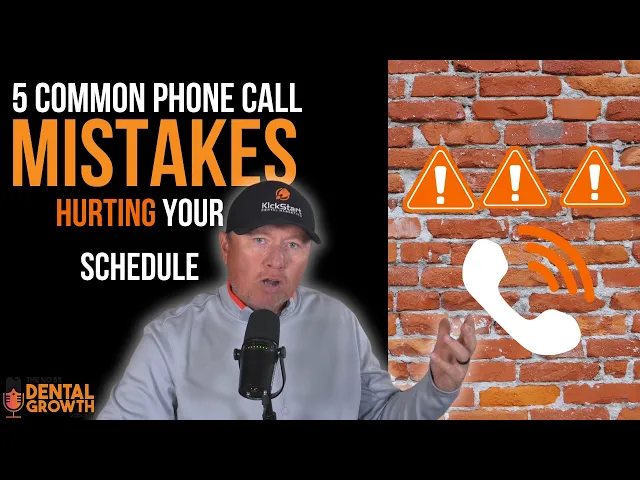
Video: No BS Dental Growth Podcast, KickStart Dental Marketing, on how practices lose patients on the phone.
A fourteen day rollout that does not scare patients
Days one to three. Sort your last 100 calls into buckets: hours and location, cost and insurance, new patient booking, reschedule, emergency, billing. Five buckets usually cover most of the volume.
Days four to six. Write the answers with your office manager: prices, insurances accepted, parking, what counts as an emergency. The agent is only as good as this document.
Days seven to nine. Go live after hours only. Nothing during opening hours. Read every transcript the next morning.
Days ten to twelve. Add daytime overflow, so the agent picks up only when every line is busy or the phone rings more than four times.
Days thirteen and fourteen. Measure. Answer rate, bookings created, escalation rate, and how many callers asked for a human. Then decide whether to widen the scope.

Vendor checklist before you sign. Source: Callin.io.
Mistakes that make patients hang up
Pretending to be human. Patients forgive the machine. They do not forgive the deception.
Long greetings. Twenty seconds of branding before the first question is where callers leave.
No escape hatch. "Let me get someone for you" has to work on the first attempt, every time.
Booking without checking the real calendar. One double booking costs more goodwill than a month of smooth calls earns.
Launching everything at once. After hours first is boring advice and it is correct.
The American Dental Association has practical guidance on handling prospective patient calls that is worth reading before you script anything.
Frequently asked questions
How much does an AI dental receptionist cost?
Most practices land somewhere between 100 and 500 dollars a month, depending on call volume and whether practice management integration is included. Per minute pricing typically runs in the tens of cents. Integration and setup are often the larger line item in year one.
Is an AI receptionist HIPAA compliant?
No tool is compliant on its own. Compliance depends on your configuration and on a signed business associate agreement with the vendor. Ask about encryption, retention, access controls and whether your call audio is used for model training.
Can it book directly into Dentrix or Open Dental?
Some can, through an API or a middleware layer. Many cannot and only create a task or send a message. Insist on a live write-back demonstration before signing anything.
Will patients know they are talking to AI?
Many will, and that is fine if you disclose it in the greeting. In practice, patients care far more about getting an answer at 8pm than about who gave it.
What happens with a dental emergency?
The agent should collect symptoms and route by rule to your on-call contact without attempting to triage clinically or to book. Test this path yourself before go-live.
Does it replace the front desk?
No. It absorbs the repetitive calls so the coordinator can do treatment plan follow-up, benefits work and the conversations that need a person. Decline in receptionist employment nationally reflects routine volume moving, not clinics running unstaffed.
The bottom line
An AI receptionist for a dental office is not a growth strategy. It is plumbing. It makes sure the demand you already paid to generate actually reaches a chair.
Start narrow. After hours and overflow. Measure answer rate and bookings created, read the transcripts weekly, and widen the scope only when the boring calls are handled cleanly.
If you want to hear how that sounds on your own line, Callin.io builds AI voice agents that answer, book and escalate on your rules, with the practice management integration done properly. Start with our AI phone agent overview, or compare approaches in our guide to the AI answering service category.