AI Call Center Software: Features, Real Results and How to Choose in 2026
What AI call center software does, the 5 layers to compare, what independent research says about results, what it costs and an 8-step rollout plan.
AI call center software uses artificial intelligence to answer, route, assist and analyse customer calls. In practice it covers a family of tools: AI voice agents that resolve calls on their own, intelligent routing, real-time assistance for human agents, automatic transcripts and summaries, and quality analysis on every conversation. Together they change how a contact center works, from the first ring to the last report.
The evidence is now solid enough to plan with. A large NBER study of 5,179 customer support agents found that access to a generative AI assistant raised productivity by 14% on average, and by 34% for novice and less experienced agents. This guide explains what the software does, what results you can realistically expect, what it costs and how to roll it out without losing your customers or your team.
Key takeaways
AI call center software works in layers: self-service voice agents, routing, agent assist, analytics and the integrations underneath.
The strongest proven gains come from helping agents, especially new ones, not only from replacing them.
Automation grows over time: plan for a gradual increase, not a big-bang switch.
Data, governance and change management decide success more than the choice of vendor.
What is an AI call center?
An AI call center is a contact center where artificial intelligence handles part of the conversations and supports the people who handle the rest. Simple, repetitive calls are resolved by AI voice agents. Complex or sensitive calls go to human agents, who receive suggestions, customer history and automatic summaries while they talk.
The difference from a traditional call center is not only automation. It is that every call becomes data: transcribed, classified and measured. That data feeds routing, coaching, knowledge updates and product decisions.
How AI call center software is built
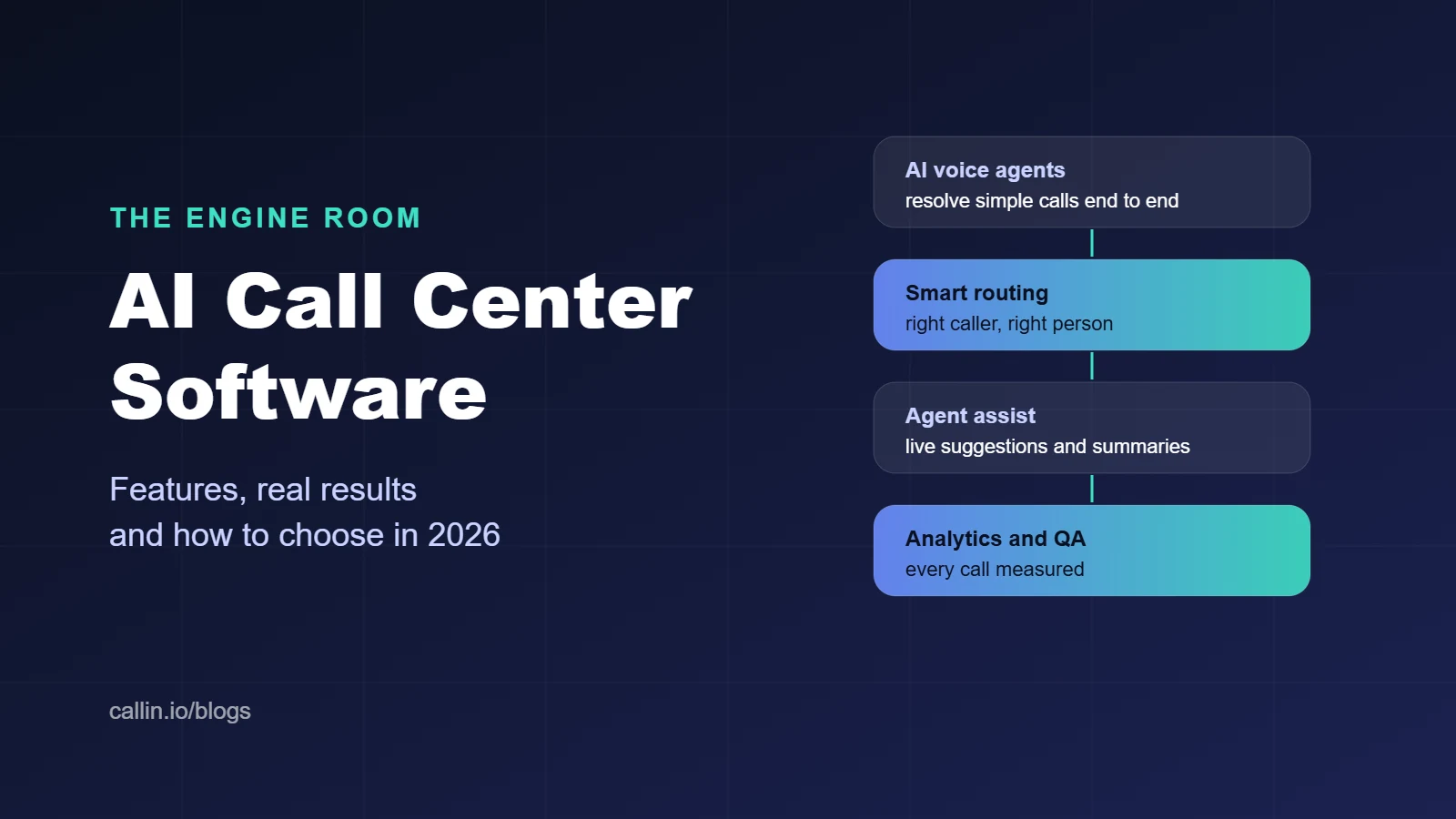
Most platforms combine the same five layers. Understanding them helps you compare vendors that describe similar features with very different words.
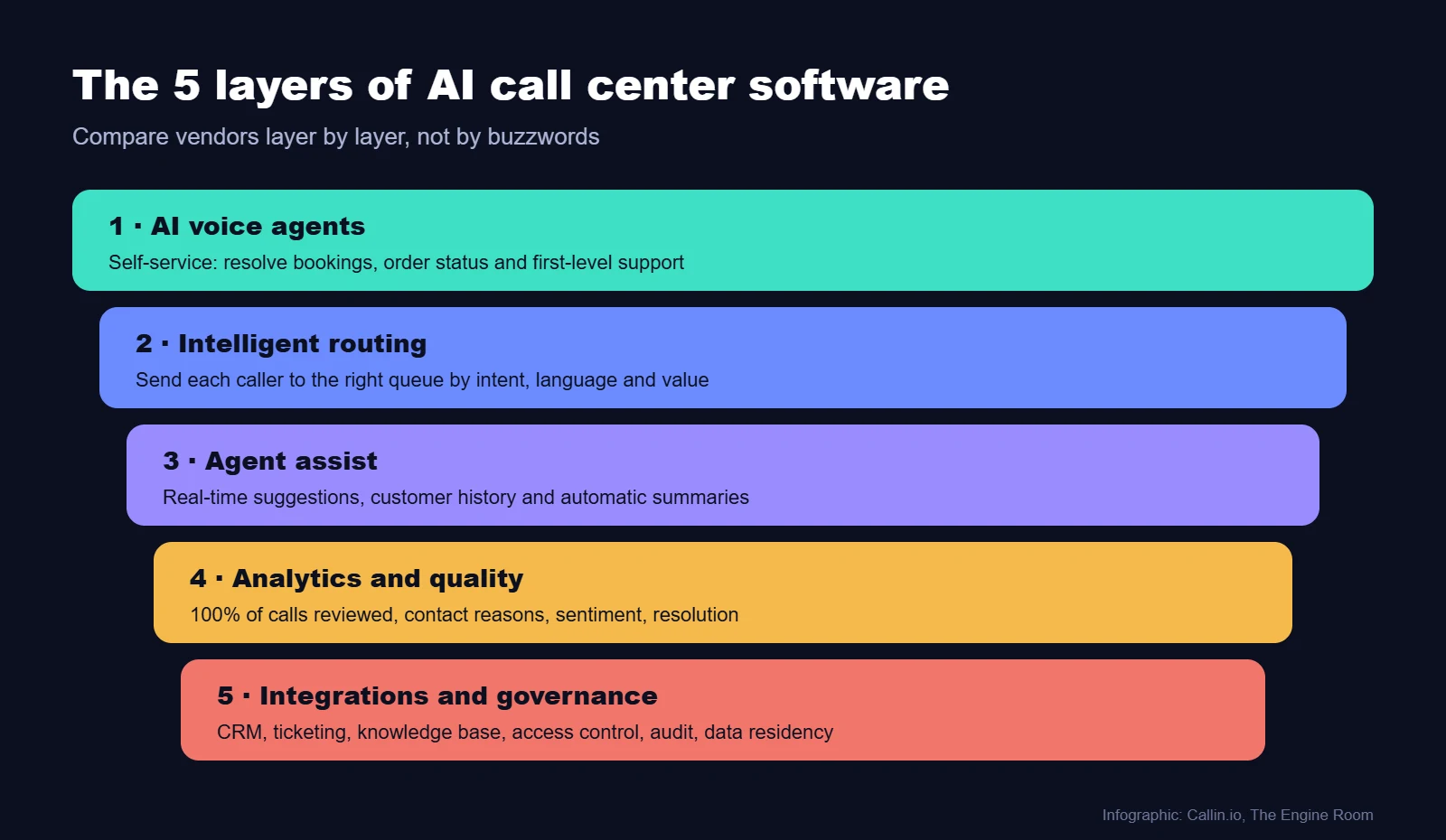
Infographic: Callin.io, The Engine Room
Some vendors offer all five layers in one suite, such as the large contact center platforms (Genesys, NICE, Five9, Talkdesk, Zendesk and others). Others specialise in one layer, for example AI voice agents that plug into your existing phone system. Neither approach is better by default: suites simplify procurement, while specialised tools often move faster in their niche. Our guide to choosing an AI voice platform covers the voice layer in detail.
Key features to look for
AI voice agents that resolve calls end to end: bookings, order status, account questions, first-level support.
Intelligent routing that sends each caller to the right queue or person based on intent, language, value and history.
Agent assist that listens in real time and suggests answers, knowledge articles and next steps.
Transcripts and summaries written automatically after every call, saving minutes of wrap-up work.
Automated quality assurance that reviews 100% of calls instead of a small random sample.
Analytics on contact reasons, sentiment and resolution, to fix problems at the source.
Integrations and governance: CRM, ticketing, knowledge base, plus access controls, audit logs and data residency.
What results to expect
Vendor case studies are easy to find. Independent evidence is rarer, so it helps to separate the two.
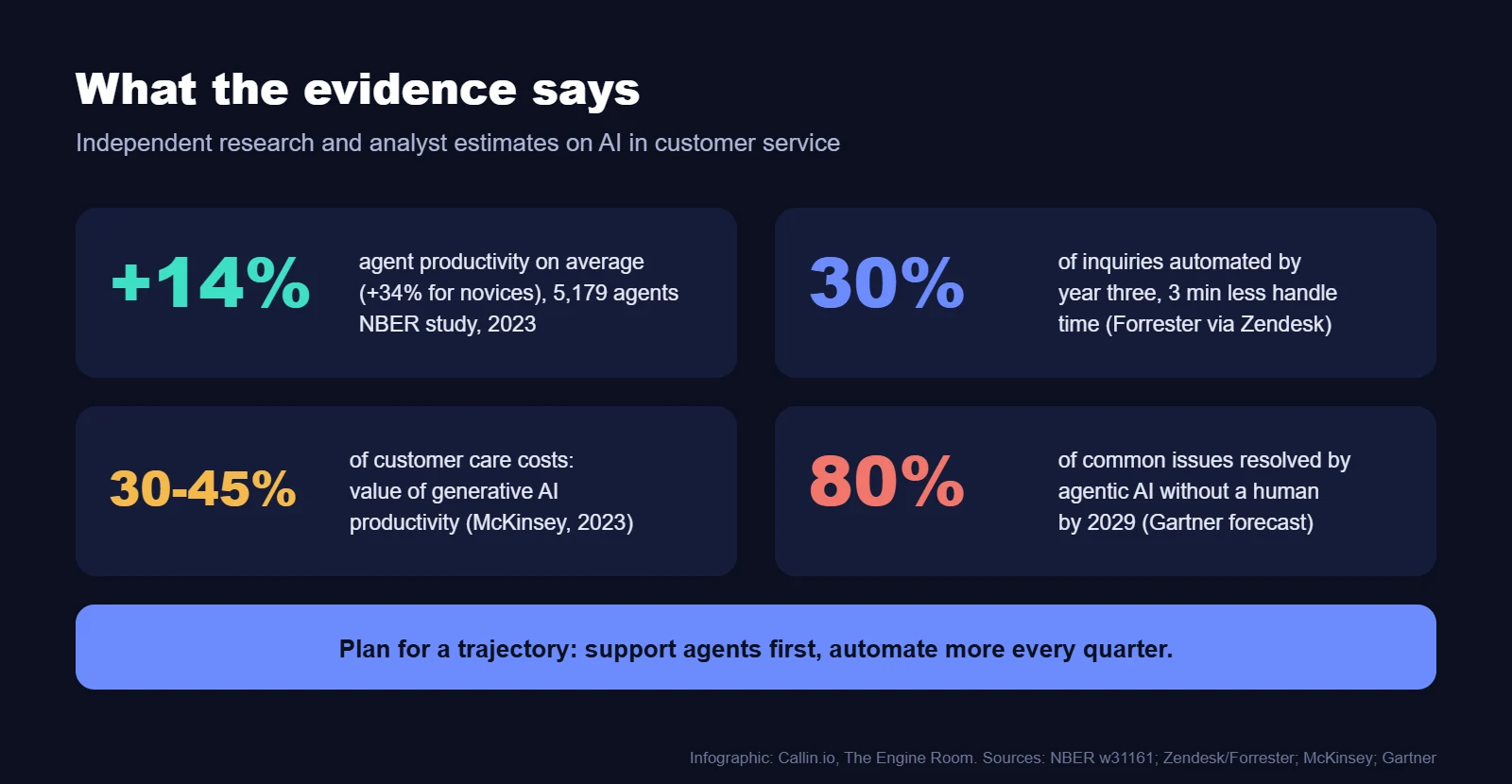
Infographic: Callin.io, The Engine Room. Sources: NBER (2023), Forrester via Zendesk (2025), McKinsey (2023), Gartner (2025)
The NBER study measured real agents in production over time, which makes it the most reliable data point. Zendesk reports that a 2025 Forrester Consulting study found organisations automating 30% of inquiries by year three and cutting average handle time by three minutes. McKinsey estimates that generative AI in customer care could create value equal to 30% to 45% of current function costs. Looking ahead, Gartner predicts that agentic AI will resolve 80% of common service issues without a human by 2029.
Read these numbers as a trajectory, not a promise. The 30% automation figure is reached by year three, not in the first month. The biggest early win is often faster, better human agents.
AI call center vs traditional call center
A traditional call center scales by adding people, shifts and training. An AI call center scales by adding automation to the simple calls and support to the complex ones. Queues shrink at peak times, after-hours calls get answered, and managers see every conversation instead of a sample.
The human side changes too. Agents spend less time on repetitive questions and more on the conversations that need judgement and empathy. That is good news for customers, but it requires new skills and a clear plan for the team, which many projects forget.
What AI call center software costs
Pricing models vary widely. Suites usually charge per agent seat per month, with AI features as add-ons or usage credits. AI voice agents are typically billed per minute or per resolved conversation; all-in voice costs usually range from about $0.09 to $0.30 per minute depending on the model, voice and telephony. Our guide to AI voice agent pricing breaks down every layer.
To compare offers, build one number: the total cost per resolved contact, including licences, usage, integration work and the time your team spends maintaining the system. Then compare it with your current cost per contact.

Photo: BaljkanN 4 on Unsplash. The strongest results come from AI that supports agents, not only from AI that replaces calls.
How to implement an AI call center in 8 steps
Zendesk's own guidance proposes a sensible rollout. We follow the same logic and add the points that are most often underestimated.
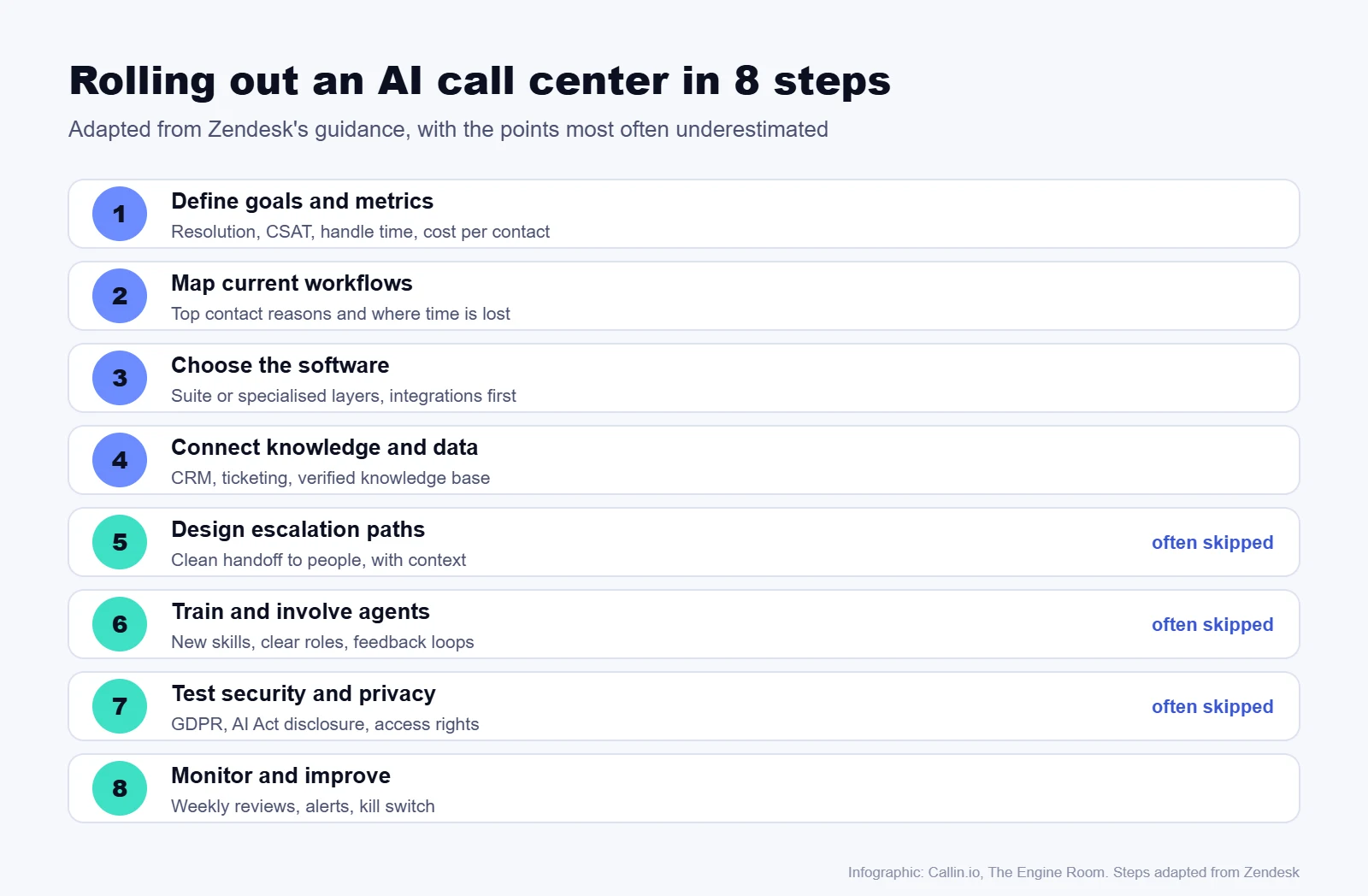
Infographic: Callin.io, The Engine Room. Steps adapted from Zendesk's rollout guidance
Three steps deserve extra attention. Escalation design: every automated flow needs a clean path to a person, with context passed along. Security and privacy tests: in Europe, GDPR and the AI Act transparency rules apply to every AI conversation. Ongoing monitoring: as we explain in AI voice agents in production, most failures happen after launch, when nobody is watching.
Risks and how to manage them
Wrong answers. AI can give confident but incorrect information. Ground it in verified knowledge and monitor answers, as described in our article on LLM hallucinations.
Security. Voice agents connected to systems can be manipulated. Limit what they can do and read about prompt injection before you connect refunds or account changes.
Vendor lock-in. Ask how you can export transcripts, recordings, prompts and configurations if you change platform.
Team morale. Explain what changes, train people on the new tools and involve experienced agents in improving the AI. The NBER study suggests AI spreads the know-how of the best agents to the whole team, which is a strong message to share.
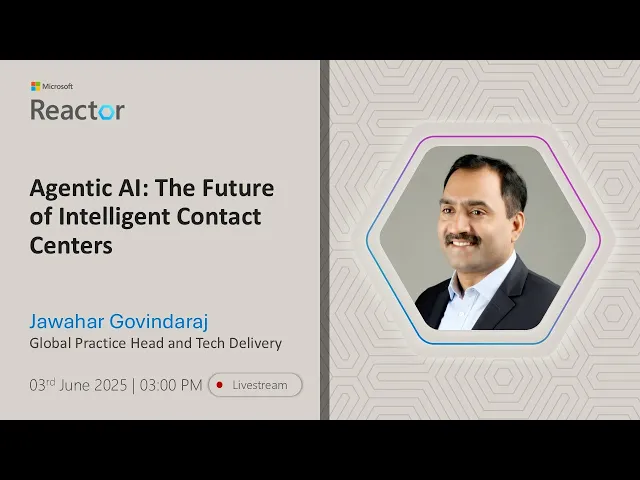
Watch: agentic AI in the contact center
This session from Microsoft Reactor explores how AI agents are changing contact center operations, with practical examples.
Frequently asked questions
Will AI replace call center agents?
It replaces many repetitive calls and tasks, but complex and emotional conversations still need people. The best-documented gains come from AI that makes agents faster and better.
Can I add AI to my existing call center software?
Often yes. Many AI voice agents connect to existing phone systems through SIP, and many suites offer AI add-ons. Check integrations with your CRM and ticketing tools first.
How long does implementation take?
A first automated use case can go live in a few weeks. A full rollout with routing, agent assist and quality analysis usually takes several months.
What should I automate first?
High-volume, low-risk calls with clear answers: order status, bookings, opening hours, password resets. Leave complaints and sensitive topics to people.
How do I measure success?
Track resolution rate, customer satisfaction, average handle time, transfer rate and cost per resolved contact, before and after the rollout.
The bottom line
AI call center software is no longer about replacing people with machines. It is about giving every caller a faster answer and every agent better support. Start with one use case, measure honestly and expand step by step.
Want to add an AI voice agent to your call center? Try Callin.io for free or discover our AI voice agents for IT support.